Web Scraping for Business: What It Does Well, Where It Breaks, and When to Build Custom
Web scraping can pull competitor prices and leads for you around the clock. It can also feed you garbage data for weeks before anyone notices.
Web Scraping for Business: What It Does Well, Where It Breaks, and When to Build Custom
Web scraping for business has become one of the fastest ways to pull competitor pricing, product listings, lead data, and market signals off the web without hiring someone to copy and paste them by hand. It sounds like a shortcut to unlimited free data, and it is, but it comes with limits that most sales pitches for scraping tools leave out.
What Is Web Scraping and Why Businesses Use It
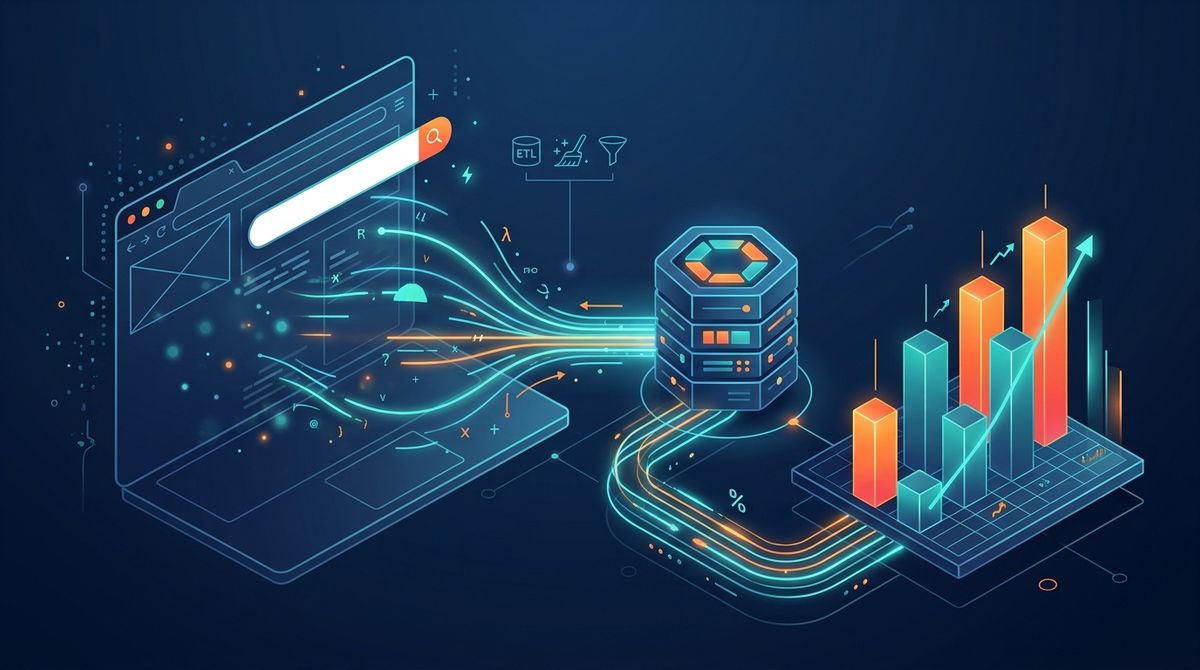
Web scraping is the automated process of pulling structured data off websites: this information includes prices, product specs, contact information, reviews, job listings, whatever a page displays. Instead of a person visiting a hundred pages a day, a script visits thousands and pulls the same fields every time.
Data aggregation is the next step. Once you have scraped data from multiple sources, aggregation combines it into one clean dataset you can actually use: a pricing comparison, a lead list, a market trend report. Scraping without aggregation gives you a pile of raw information sitting in separate files.
What Web Scraping for Business Actually Does Well
Used correctly, scraping is strong at a few specific jobs. It excels at repetitive data-collection tasks that would otherwise consume hours of staff time each week.
- Competitor price monitoring — tracking how competitors price and package products over time
- Lead generation — pulling contact and firmographic data from public directories and listings
- Market research — aggregating product reviews, job postings, or listings to spot trends
- Content and inventory syncing — keeping a catalog updated from a supplier's public site
These are all cases where the value comes from volume and consistency. A person doing this manually gets tired, distracted, or inconsistent. A well-built scraper does not.
Where Web Scraping Hits Its Limits
Scraping breaks down fastest when the site it depends on changes, such as a redesigned page layout or a new login wall. These all can quietly stop your data pipeline without anyone noticing until a report looks wrong. That means scraping is never a one-time build; it requires ongoing maintenance, and businesses that skip this step end up making decisions based on stale or broken data.
It also only tells you so much. A scraper can see that a competitor dropped their price 15%. It has no idea why they did it, and it definitely can't tell you what's actually driving a wave of bad reviews. Companies that rely on scraped data as their sole market analysis, rather than just one piece of it, usually find that out the hard way.
Legal and Ethical Boundaries to Know
Not every site wants to be scraped. A lot of them say so directly in their terms of service. Public data is usually fine to pull, but things get riskier once you're behind a login, such as dealing with paywalled content or touching anything that contains personal information. Read the terms, check robots.txt, don't scrape personal data without consent, and don't hammer someone's server with requests. If the project has real stakes, get a lawyer to look at it before you build anything.
When to Build Custom Web Scraping vs Buying a Tool
Off-the-shelf tools are fine if the job is simple and the site doesn't change much. They start falling apart on anything more complicated, sites that get restructured often, or work that needs to run on a schedule without you checking on it.
Custom-built pipelines exist for exactly that gap. You design it around what you actually need, share someone to monitor it, and it plugs straight into the tools your team already uses. No new subscription, no manual export, you have to remember to do every week.
Scraped data is only worth what happens to it after collection. The pipeline that cleans, structures, and delivers it matters more than the scraping itself.
How Data Aggregation Turns Scraped Data Into Business Value
Scraping five competitor sites doesn't do much for you on its own. You've just got five spreadsheets now. The value shows up once that data is normalized into a single format, refreshed automatically, and dropped into a dashboard that your sales or pricing team actually opens every week. That's the difference between a pile of numbers and something someone acts on.
Automation is what makes it sustainable. A pipeline that scrapes, cleans it up, aggregates it, and pings your team when a competitor drops a price or a new lead fits your criteria takes a job that would otherwise sit untouched on someone's to-do list and handles it.
FAQ
Is web scraping legal for businesses?
Generally, yes, if the data is public. But that's not blanket protection; terms of service can restrict it, and scraping anything behind a login or that contains personal information is a different risk category entirely. Check the site's terms and robots.txt before you build. Talk to a lawyer if the project actually matters.
What's the difference between web scraping and an API?
An API is a door the company built for you on purpose, documented, rate-limited, meant to be used. A scraper walks in through a window. It'll work, but that window can get boarded up any time the site changes.
How much does custom web scraping cost?
Depends on how many sites there are, how often they change their layouts, and whether you need the output to live in a CRM or you're fine with a spreadsheet. Off-the-shelf is cheaper on day one but more expensive in the hours you'll spend fixing it yourself later. Custom costs more upfront and is built not to need those hours.
Why do web scrapers stop working?
The site changed. Maybe a redesign, maybe a login wall went up, maybe their anti-bot system got smarter. It happens to almost every scraper eventually, which is why nobody should treat one as a set-it-and-forget-it tool.
Do I need data aggregation if I'm already scraping?
If you want something, you can actually decide on “yes.” Raw scraped files from five sources are still five separate things to compare by hand. Aggregation is what turns that into one dataset.
When should I build a custom scraper instead of buying a tool?
Once the job outgrows a spreadsheet, if it needs to run on a schedule, feed a CRM, or survive a site that restructures every few months, off-the-shelf tools start costing you more in babysitting than a custom build would've cost outright.
Is Web Scraping for Business Worth the Investment?
Web scraping for business makes sense when the data is public, repetitive to collect by hand, and worth enough that automating it pays for itself in staff time saved. It stops making sense the second someone treats it as a replacement for real market research, legal review, or actual strategic thinking. The businesses getting the most out of it are the ones maintaining it like infrastructure, not the ones who built it once and forgot about it.
If you're weighing whether a custom scraping and aggregation pipeline is worth building for your business, that's exactly the kind of fixed-price, ROI-focused project Resilio Partners builds for clients. Something that ships, gets maintained, and actually feeds decisions instead of sitting in a spreadsheet nobody opens.
References:
6 Key Programming Languages for Web Scraping & Proxies | Evomi. https://evomi.com/blog/6-key-languages-web-scraping-proxies
AI Transparency: Claude was used to assist with research and to augment my own experience for this article. Grammarly was used to clean up spelling, grammar, and sentence structure.